REVIEW · SAO MIGUEL ISLAND
Azores Marine Birdwatching Expedition
Book on GetYourGuide →Operated by Azores Whale Watching TERRA AZUL · Bookable on GetYourGuide
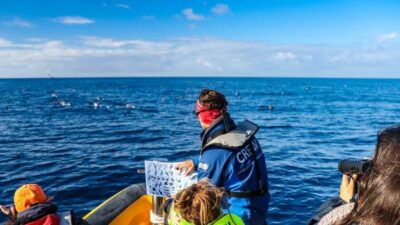
Sea birds show up fast. On this Azores marine birdwatching outing, marine biologists run the show, explaining migration routes and behavior as you cruise. I love that they use VHF radio to help the skipper approach carefully without startling colonies.
I also love the Opticron 8×42 binoculars and the fact you’re kitted with an impermeable suit for cool spray. The one catch: you can’t guarantee specific birds, and extreme weather can shift the plan.
In This Review
- Key things I’d center in your planning
- What makes this Azores sea-bird cruise feel different
- Meeting in Ponta Delgada and getting suited up at the marina
- The long cruise: using behavior cues to find Cory’s Shearwaters and terns
- How the team approaches birds: the quiet science of getting close
- Vila Franca do Campo Islet: where colonies turn the ocean into a classroom
- A quick break at the marina: what you do with the downtime
- Price and value: what $66 buys you in the real world
- Who should book, and who should think twice
- Final call: should you book this Azores marine birdwatching expedition?
- FAQ
- How long is the Azores Marine Birdwatching Expedition?
- Where does the tour start?
- What boat will you use?
- What’s included with the ticket?
- Do I need to bring binoculars?
- What should I wear or pack?
- What wildlife will I be able to see?
- Is seeing certain birds guaranteed?
- What languages is the tour guide available in?
- What happens if weather is bad?
- Is there free cancellation?
Key things I’d center in your planning
- Biologist-led bird spotting focused on behavior, not just names
- VHF-guided approach for a quieter, closer look at colonies
- Opticron 8×42 binoculars included so you can actually track birds
- Zodiac RIB + waterproof gear makes the outing more comfortable
- Vila Franca do Campo Islet time for photo opportunities at seabird colonies
- A realistic species mix from common breeders to rarer visitors on lucky days
What makes this Azores sea-bird cruise feel different
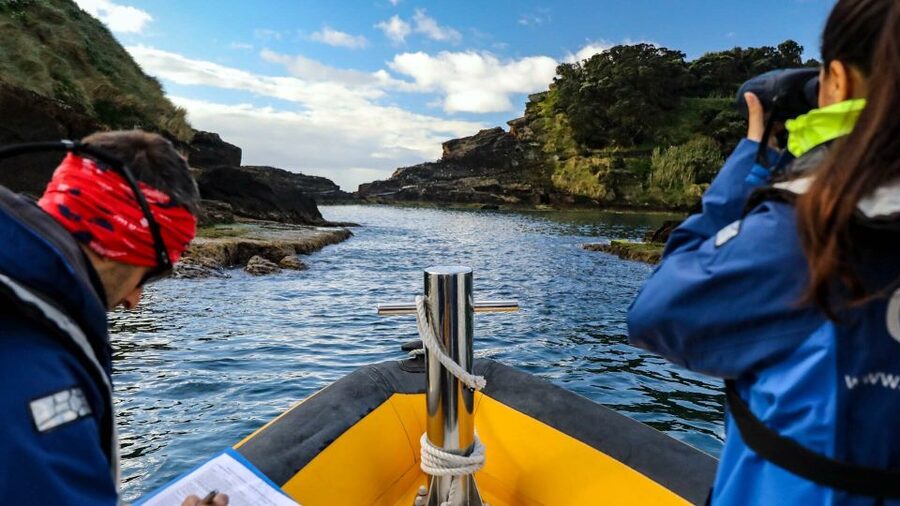
This isn’t a “sit and hope” boat trip. You’ll get a guided birdwatching routine from people who study seabirds for a living. That matters, because when someone explains what you’re looking for, the whole ocean experience gets more readable fast.
I especially like how the team ties sightings to behavior. You’re not only told the species list. You also learn what migration routes bring through the Azores, when birds are more likely to show up, and how seabirds act when they’re feeding, traveling, or settling near breeding areas. That turns random sightings into something you can follow.
The other big differentiator is the approach style. The skipper gets directions from inland lookouts using VHF radio, allowing the boat to carefully approach at a distance that keeps the birds calm. In birdwatching terms, that’s a big deal. The closer look comes from being smart, not from charging in.
You can also read our reviews of more tours and experiences in Sao Miguel Island.
Meeting in Ponta Delgada and getting suited up at the marina
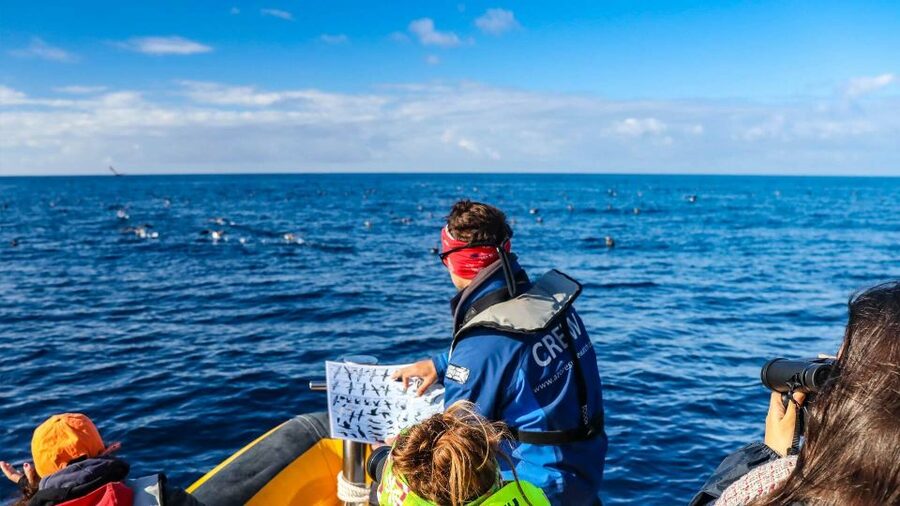
You’ll start from the Ponta Delgada city centre area, then drive east along the coast to Vila Franca do Campo. Once you reach the marina, you descend toward sea level where the base is set up, and you can park nearby.
Before you head out, there’s a safety brief for the Zodiac RIB. Expect practical talk about how the boat works and how to move safely during spotting. Then you’ll get the gear that actually helps on the water: a life vest and an impermeable suit. Even in nicer months, the Azores can cool you down quickly once you’re moving across open water.
Bring warm clothing anyway. The suit helps, but you’ll still want layers for wind, and for the moment you stop moving to focus on birds. A camera is a good idea too, because you’ll be looking at a lot of birds at sea level and in flight—small, fast targets.
Also, plan to bring what you normally bring on a boat day: snacks, sunscreen, and water. Light food is permitted onboard, which is handy if you want to avoid getting hungry during spotting.
The long cruise: using behavior cues to find Cory’s Shearwaters and terns
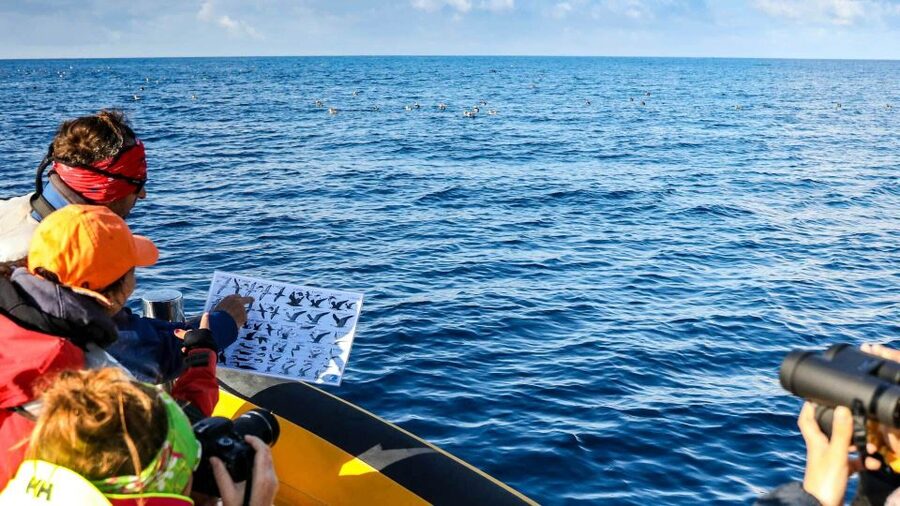
Most of your time is spent cruising the Azores coastline and scanning for marine birds. You’ll get an introduction to the species you’re likely to see and what to look for—especially their patterns and behavior. This is the part where the biology education pays off.
Here’s what you should know about the bird seasons. Marine birds can be seen year-round in the Azores, with numbers typically peaking in spring and autumn when migrants and vagrants arrive. So if your timing is flexible, those shoulder seasons are the sweet spot for variety. If you’re going in a quieter month, you may see fewer species at once, but you can still get rewarding views of local breeders and regular visitors.
On lucky days, the species list can feel almost unreal. The outing is set up for observing dozens of seabirds, including:
- Cory’s Shearwater and Barolo Shearwater
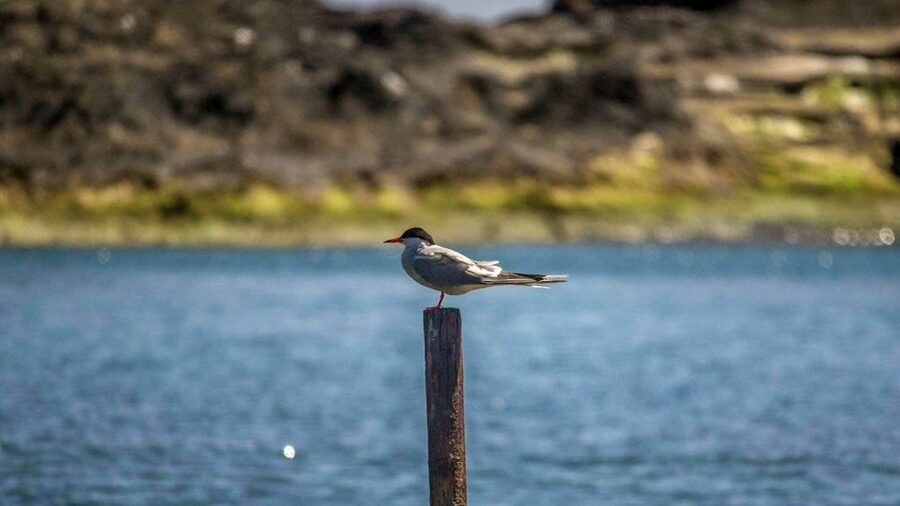
- Common and Roseate Terns
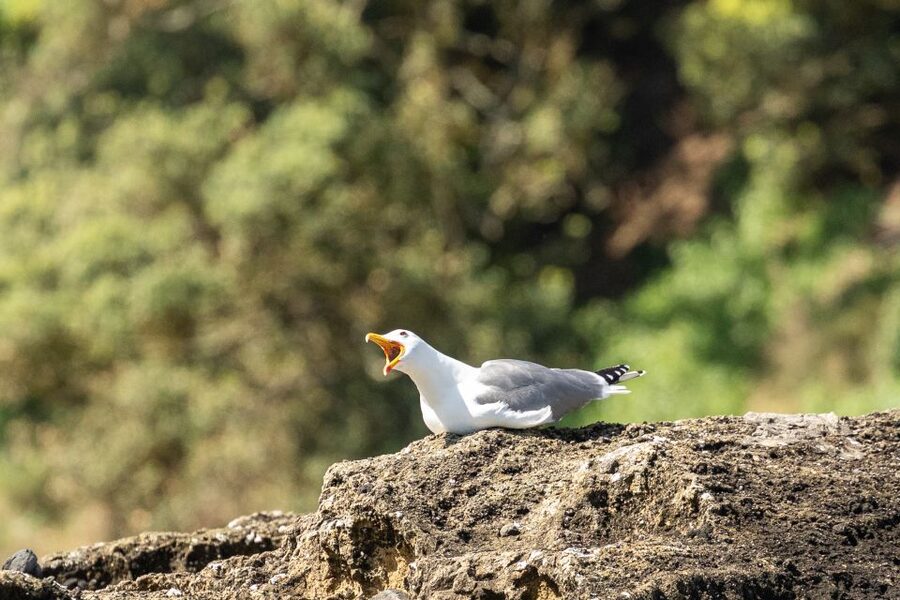
- Yellow-legged Gulls
- Bulwer’s Petrel
- Wilson’s and Madeiran Storm-petrels
Then there’s the bonus category: birds you don’t expect every day. Depending on conditions, you might spot less-common types like Bridled or Sooty Terns. And you might also get a look at species not currently breeding but regularly seen, such as Great Shearwater, Leach’s Storm-petrel, Manx and Sooty Shearwater, and even vagrant visitors like Northern Gannets.
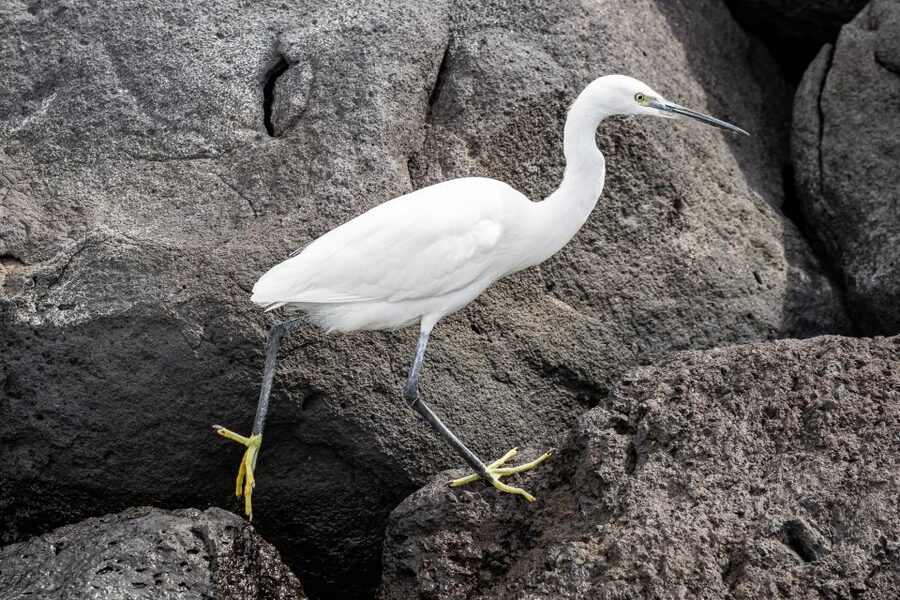
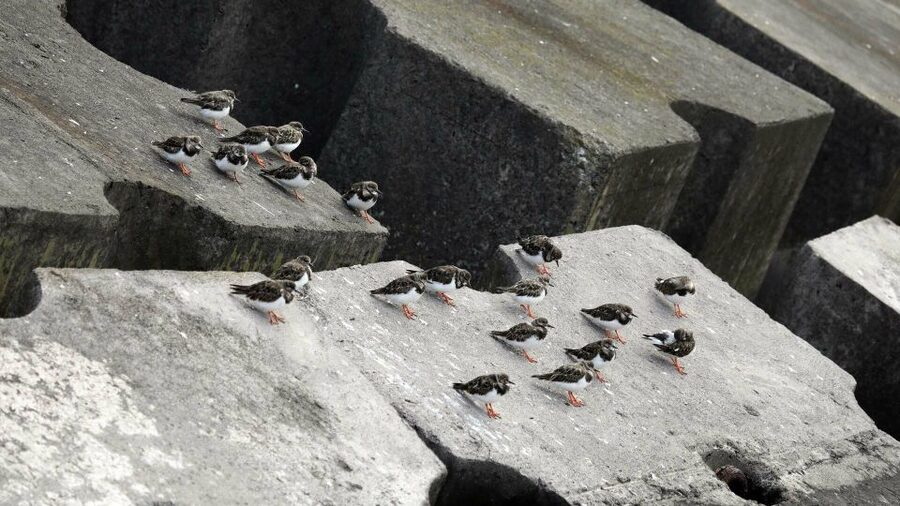
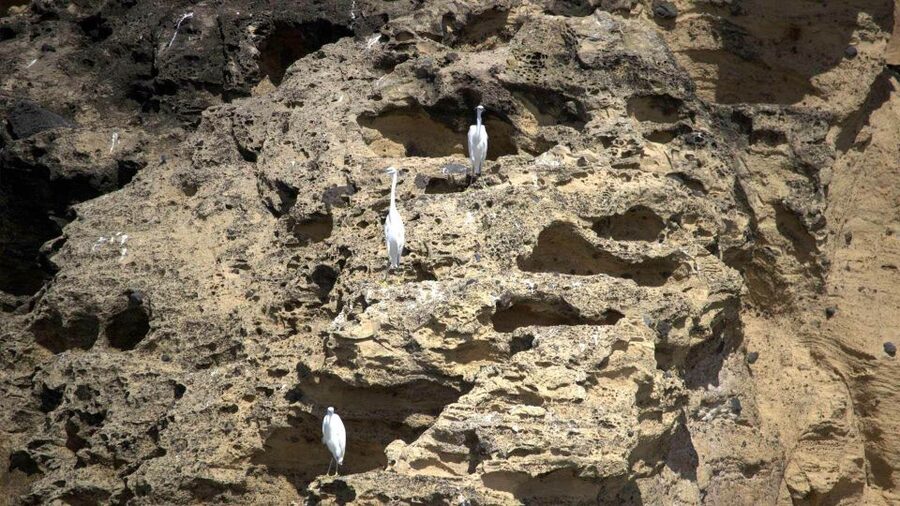
For birds of prey and other coastal wildlife, keep your eyes open too. The cruise can bring sightings like Buzzards, plus shore-adapted species such as Turnstones and Sanderlings. The list also includes Canaries, Little Egrets, Wagtails, and Whimbrels. The key is that the team doesn’t just point. They help you interpret what you’re seeing so you can keep tracking once a bird flies off.
A practical tip: listen while you scan. When the guide talks about migration routes and behavior, they’re teaching you how to predict where birds might show up next. If you treat it like a lecture, you’ll miss the action. If you treat it like a spotting game, you’ll feel more in control.
How the team approaches birds: the quiet science of getting close
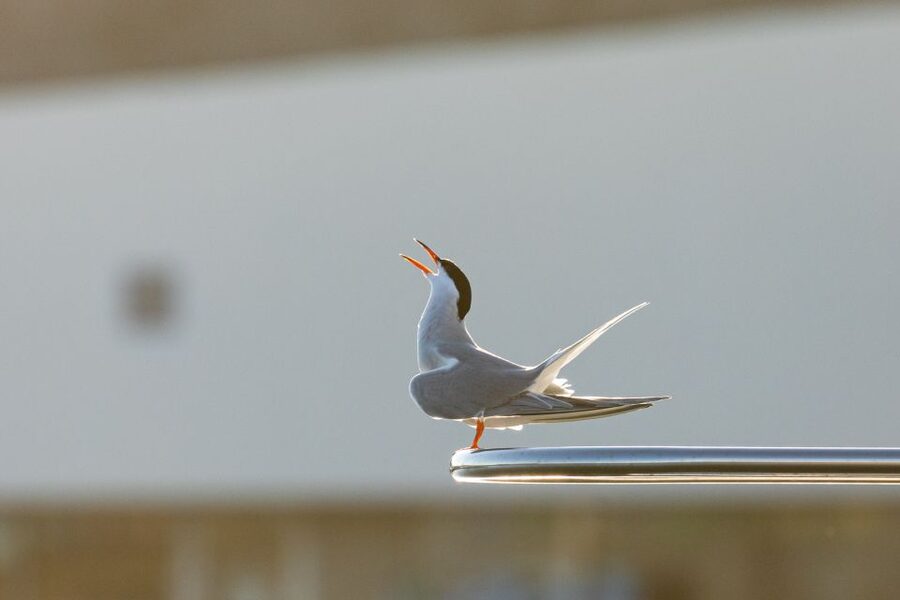
This part is subtle, but it’s one of the most valuable features of the experience. The team has inland lookout support, and they use VHF radio to guide careful movement. That lets the boat approach in a way that doesn’t blast the birds into flight.
In wildlife watching, “distance” isn’t just about safety. It’s about behavior. If you push too close too fast, birds abandon feeding or settlement spots. If you’re careful, you get more natural actions—diving patterns, surface-feeding behavior, colony dynamics, and flight routes that show you how birds use the island as a refuge.
You’ll also hear how fieldwork ties into the tour experience. The team discusses field imagery and data collection connected to local research. Even if you’re not a scientist, you’ll walk away with a better sense of why accurate observation matters. It’s not just about checking off species names. It’s about recording patterns and understanding what these birds do across seasons.
So yes, you’ll likely leave with a stack of photos and a new species vocabulary. But you’ll also leave with a method: how to watch for cues, how to stay patient, and how to connect what you see to what the guide explains.
Vila Franca do Campo Islet: where colonies turn the ocean into a classroom
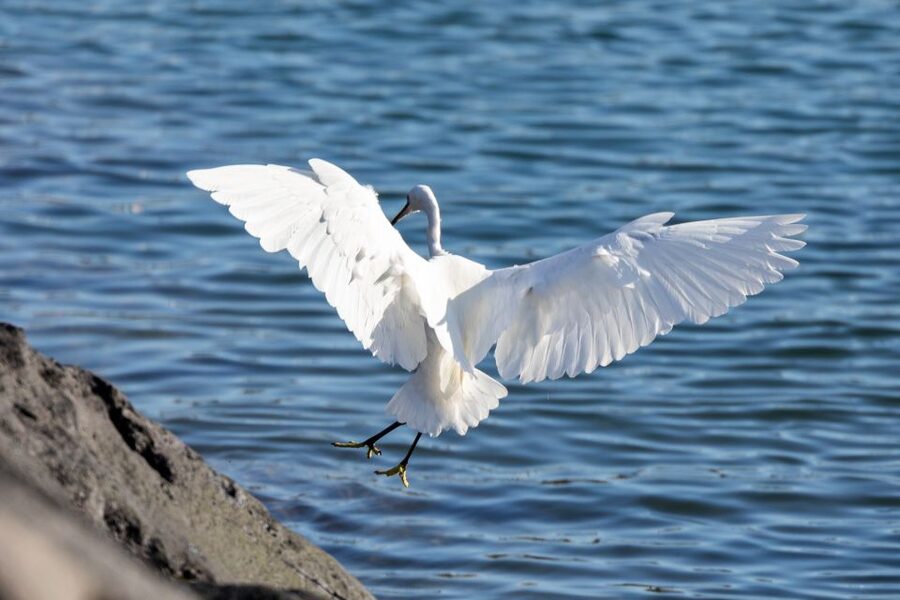
The tour’s key wildlife moment is the stop at the Islet of Vila Franca do Campo, an off-coast nature reserve. This is where the seabird colony experience becomes much more focused.
You’ll cruise out to the islet, then have time for a photo stop and wildlife viewing. The time on site is short—about half an hour—but it’s enough when the team is working with you to locate the colony areas and teach you what’s normal versus what’s unusual.
Because it’s a nature reserve, the whole experience here is about respectful observation. You’re aiming to see real colony behavior: birds gathering, moving around the islet’s edges, and using the area as a breeding and chick-rearing haven. The islands act like an oasis in the North Atlantic—warm enough and productive enough to support breeding and raise young, while also serving as a refuge during migration.
If you’re hoping to photograph birds, this is the moment. Expect a flurry of activity as birds shift positions and adjust to your presence and the boat’s location. A longer time on shore would be great, but the tradeoff here is that the tour is designed to keep your day moving so you can combine colony time with ongoing cruising elsewhere.
A quick break at the marina: what you do with the downtime
After the islet stop, you’ll head back to Marina de Vila Franca do Campo. There’s a brief free-time window—around 15 minutes—plus a chance for some shopping.
This isn’t a full land excursion, but it’s a useful reset. You’ll likely feel the day in your face and legs after moving on open water for a few hours. A short break lets you stretch, check your photos, and decide what you want to snack on before you continue your Azores day.
If you’re traveling with a camera, this downtime is also smart for one reason: you can quickly review what you captured and then go back outside (if your plans include other birding stops) with a clearer sense of what settings or angles worked best.
Price and value: what $66 buys you in the real world
At about $66 per person for roughly a three-hour experience, this can be a very good deal—if you care about the guide-led side of birdwatching.
What you’re paying for isn’t only the boat ride. You’re also paying for:
- A wildlife guide team
- An experienced skipper
- Marine-biology education tied directly to what you’re seeing
- Included gear: Opticron 8×42 binoculars
- Included comfort and safety: impermeable suit and life vest
- Insurance coverage
A common problem with cheaper tours is that you end up standing on a boat with no real viewing tools, no coaching, and a guide who can only read a basic checklist. Here, you’re set up to actually see and identify. That’s what makes $66 feel fair rather than random.
Also, the group size is small, capped at 10 participants. That means you’re more likely to get attention when you have questions, and it helps the boat keep a stable spotting rhythm. In birdwatching, stable rhythm beats chaos every time.
If you already own your own binoculars and you’re an experienced birder, you might think the included gear is less important. But even then, the VHF-guided approach and behavior-focused coaching are still the real value.
Who should book, and who should think twice
This outing is best for adults and families who can handle being on a boat for a few hours and staying focused in changeable weather. You’ll want to stay alert, shift your attention quickly, and be ready to stand or move safely onboard.
A few groups should consider skipping:
- Children under 4 years aren’t suitable
- It’s not suitable for pregnant women
- It’s not suitable for people with back problems
- It’s not suitable for wheelchair users
Even if you don’t fall into those categories, keep sea conditions in mind. The itinerary can change or be canceled in extreme weather, because this is wildlife viewing at sea. That’s not a flaw—it’s reality.
Also, keep your expectations honest. As with any wildlife tour, it’s not possible to guarantee specific animals. The Azores does host a lot of seabird activity, but the ocean can be unpredictable. The upside is that the team is prepared to maximize your odds and teach you what to do when birds are farther away or more active in short bursts.
Final call: should you book this Azores marine birdwatching expedition?
If you want more than a casual boat ride, this is a strong choice. The combination of marine biologists, small group size, Opticron binoculars, and the careful VHF radio approach turns birdwatching into something you can actually learn from while you’re doing it.
I’d book this if:
- you enjoy nature explanations that connect to behavior and seasons
- you want a hands-on spotting setup (gear and guidance)
- you’re visiting the Azores and want a single, high-quality outing focused on marine birds
I’d think twice if:
- you’re sensitive to boat movement or cold spray
- you need guaranteed sightings of a specific species
- you fall into the listed unsuitability categories (pregnancy, back problems, wheelchair)
If you like birds and you’re okay with nature running the show, this is one of the smarter ways to spend a morning or afternoon along the Azores coast.
FAQ
How long is the Azores Marine Birdwatching Expedition?
The duration is listed as 3 hours total. Starting times depend on availability.
Where does the tour start?
You start from Ponta Delgada city centre by auto, heading east along the coast to Vila Franca do Campo. The meeting point is at GPS coordinates 37.715780, -25.429745.
What boat will you use?
The tour uses a Zodiac RIB boat, with a capacity of up to 12 people.
What’s included with the ticket?
Included are Opticron 8×42 binoculars, a knowledgeable wildlife guide, an experienced skipper, the Zodiac RIB boat, an impermeable suit and life vest, and insurance.
Do I need to bring binoculars?
Binoculars are included (Opticron 8×42), but the activity also lists binoculars as something to bring. If you prefer your own, bring them.
What should I wear or pack?
Bring warm clothing, a camera, snacks, sunscreen, water, and binoculars. Light food is permitted onboard.
What wildlife will I be able to see?
You may see seabird colonies and many marine birds, including Cory’s Shearwater, Barolo Shearwater, Common and Roseate Terns, Yellow-legged Gulls, Bulwer’s Petrel, Wilson’s and Madeiran Storm-petrels. The tour also notes chance sightings of other less-common or vagrant species.
Is seeing certain birds guaranteed?
No. As with any wildlife tour in the wild, it is not possible to guarantee you will see any specific animal.
What languages is the tour guide available in?
The live tour guide is available in English, French, Dutch, Italian, Spanish, Portuguese, and German. English is listed as the official language.
What happens if weather is bad?
The itinerary may change or the tour may be canceled in case of extreme weather conditions.
Is there free cancellation?
Yes. You can cancel up to 24 hours in advance for a full refund.